

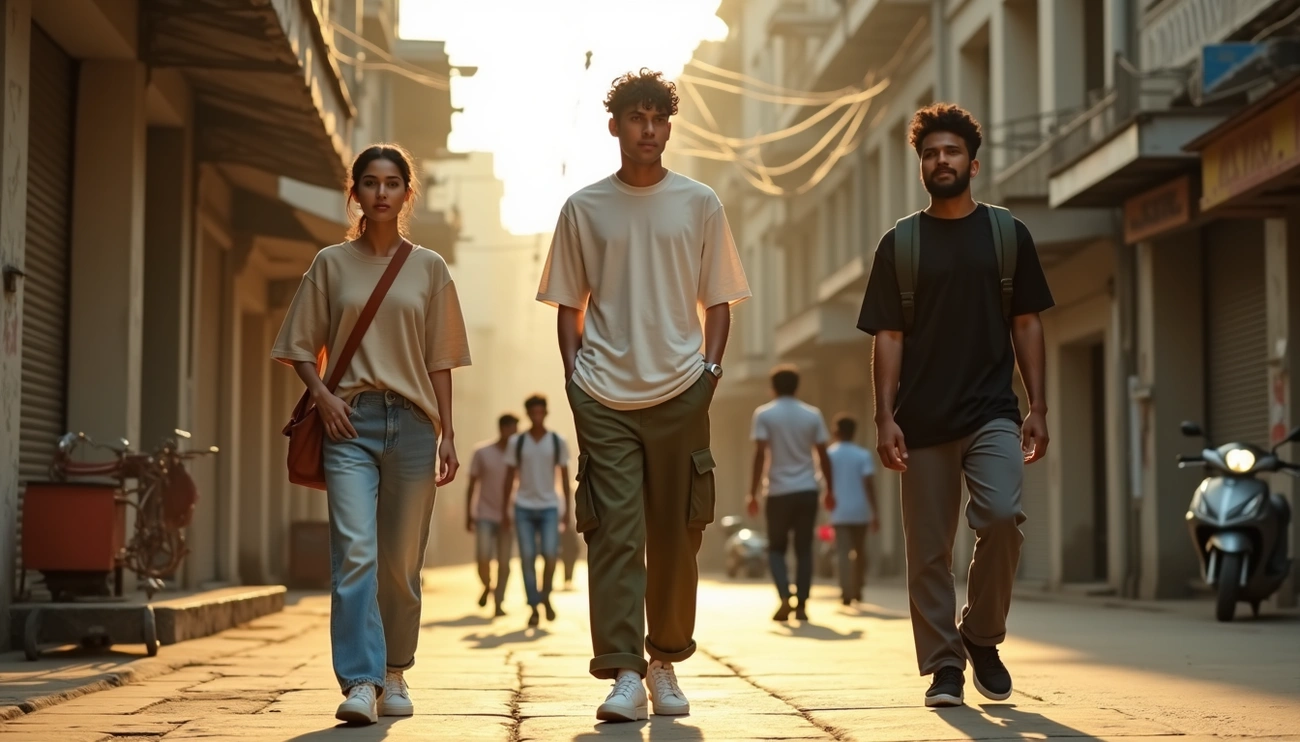
Streetwear trends India is experiencing in 2026 aren't driven by hype anymore. For years, limited drops, fast sellouts, and exclusive releases defined what we called streetwear. That model is fading. The streetwear trend now winning on Indian streets feels more intentional than chaotic. Street fashion in India has shifted toward practical fits, climate-appropriate fabrics, and quality over brand flexing. The streetwear industry is prioritizing comfort, functionality, and personal style instead of influencer-driven drops. With this in mind, we're breaking down what's actually working in 2026, what's fading fast, and how this shift compares to streetwear trends 2022 brought us. This is streetwear rethought for real life.
The numbers tell a clear story. Streetwear sales in urban India reached ₹5,000 crore by 2023, with projections showing 10-15% CAGR through 2025. By 2024, the market stood at ₹1,600 crore, growing at 12% annually. But raw growth doesn't explain what changed.
2026 marks the year Indian consumers actively started choosing homegrown brands over international labels. Brands from Kerala to Bangalore proved they could match global competitors in quality and design. Accordingly, we saw a fundamental shift in what drives purchase decisions. Price points became more accessible through direct-to-consumer models, and cultural storytelling started resonating more than manufactured hype.
For a decade, streetwear thrived on scarcity. Limited drops created artificial demand. Flex culture dominated. That model died because people stopped caring who had the rarest piece. The shift moved toward who's building authentic movements.
Brand flexing lost its appeal when fast fashion flooded the market with knockoffs, diluting originality. When department stores everywhere carried "streetwear," the exclusivity vanished. Gen Z rejected this manufactured virality. They wanted pieces that meant something beyond Instagram posts.
Quality became the new status symbol. Consumers now prioritize fewer, better-made pieces over constant trend chasing. Specifically, they're looking for:
Fast fashion is losing ground to premium streetwear that delivers long-term value. The streetwear industry adapted by focusing on durability and craftsmanship instead of disposable trends. Supporting local creativity shifted from nice-to-have to purchase driver. In effect, buying Indian streetwear became a statement about values, not just style.
Balance defines summer streetwear fashion in 2026. Oversized tees now focus on premium fabrics and intentional graphics instead of overly loud designs. The focus shifted from what's on the tee to how the tee sits. We're talking high-quality cotton that ensures comfort while maintaining structure, not cheap fabric that bags out after three washes.
Breathability matters in warm weather. Oversized graphic t-shirts anchor entire ensembles when paired correctly. Since 70% of millennials adopted this trend for its comfort factor, the streetwear industry adapted by prioritizing garment quality over surface graphics. An oversized tee is genuinely low maintenance to style. Pair it with joggers and sneakers, and you have an easy start to the day without looking like you're trying too hard.
Relaxed denim plays its own part in summer streetwear style. Lightweight baggy jeans give structure to your wardrobe while maintaining comfort. They reflect the relaxed mood of streetwear culture and focus on loose silhouettes rather than tight fits. Baggy fit jeans became the backbone of contemporary menswear because they work with almost every esthetic.
Oversized cargo silhouettes sit right at the center of modern street fashion in India. The pockets, relaxed cuts, and heavier silhouettes create visual texture without needing extra styling. Cargos combine utility, comfort, and oversized structure all in one piece.
Styling is all about balancing comfort with intention. Wear oversized tops with relaxed bottoms but keep it structured so the outfit doesn't look sloppy. Proportion is the force that drives the streetwear trend. Fashion stylists call this 'controlled volume'. The outfit should feel relaxed without losing shape completely.
Oversized layering dominates, but balancing proportions is key to pulling off 2026's signature look. Pair an oversized hoodie with tapered joggers or relaxed cargos. Avoid oversized-on-oversized unless you're intentionally experimenting with avant-garde proportions.
Oversized doesn't mean "too big." It means thoughtfully loose, structured in the right places, and flattering to your frame. Good baggy styling is actually all about balance. If your jeans are extremely baggy, keep your top slightly structured. Layer thoughtfully instead of adding too many oversized pieces together. Balance creates visual interest.
Fabric choice determines whether streetwear trends India follows actually work on Indian streets. Cotton remains dominant at 200-220 GSM for summer wear, providing breathability through its hollow fiber structure. But 100% cotton absorbs moisture without drying quickly, trapping sweat against skin in humid conditions. That's why the streetwear industry shifted toward engineered blends.
Tencel Lyocell disperses moisture across wider surface areas for faster evaporation. Recycled polyester mesh at 40-60 GSM, hidden as liners, pulls sweat through capillary action while holding almost no moisture itself. Open weaves like leno or gauze allow wind penetration, creating micro-climates. A 130 GSM slub cotton-jute blend breathes better than 180 GSM cotton poplin because weave structure matters as much as weight.
Street fashion in India requires modular defense against humidity and rain. The base layer uses ultra-lightweight, quick-dry synthetics or Tencel to maintain dry skin contact. Mid-layers are loose-fitting, breathable shirts in modal-cotton blends, worn open for air gaps. Outer layers need packable, water-resistant shells with underarm vents. Without vents, you overheat inside waterproof jackets.
Cooling, wicking, and anti-odor fabrics handle extreme weather. Moisture-wicking relies on hydrophobic synthetic fibers that resist water penetration, allowing sweat to move through fabric via capillary action. Polyester absorbs only 0.4% of its weight in moisture compared to cotton's high absorbency.
Quick-dry fabrics keep you 30-40% cooler by preventing sweat saturation. They reduce chafing, control odor better than cotton, and dry within hours of washing. Polyester and nylon wick moisture efficiently but retain odor. Merino wool wicks without odor retention.
Functional design removes friction from your day. When outfits adapt to temperature changes and move with your body, you spend less mental energy managing clothing. Climate-adaptive minimalism delivers mastery over elements, making silent performance the new flex.
Streetwear became a rich man's fetish. Luxury streetwear pushed the culture to fashion's periphery instead of keeping it rooted in communities. The streetwear trend in India is reversing this trajectory. Brands are returning to grassroots, building hype in local communities rather than chasing luxury price tags.
Drop culture fatigued consumers. People aren't crazy about coveted streetwear items like Jordans anymore. Hype-driven scarcity no longer fuels desire when everyone can spot manufactured exclusivity. The streetwear industry learned that customers sniff out phonies easily.
Homegrown brands gained traction through trust. They understand Indian climates, body types, and daily routines better than global labels. Over 800 digital-first fashion brands launched in India since 2019. Specifically, 40% of buyers for some labels are international. These brands build communities, not just product lines.
Visual fatigue drove 40% of Gen Z toward minimalism by 2023. Intentional indistinguishability replaced attention-seeking outfits. Street fashion in India now prioritizes how clothes perform over time. Graphics became meaningful rather than random.
66% of global consumers pay more for sustainable brands. Indian labels use organic cotton, bamboo, and ethical production. Sustainability merged with streetwear trends India follows, making conscious consumption the baseline expectation.
Streetwear trends India follows in 2026 prove that authenticity beats hype. We've watched the shift from logo flexing to quality basics, from influencer drops to homegrown brands that understand our climate and culture. Indeed, this isn't a temporary phase. Functional fabrics, intentional fits, and sustainable choices now define what wins on Indian streets. Choose fewer, better pieces that actually work for your daily life, and you're already ahead of the curve.